

Meta Title: 3 Ways Engagement-First Content Beats Vanity Metrics
Meta Description: Discover why engagement-first content outperforms vanity metrics and the strategies that make it work.
Key Takeaways
- Focus on actionable engagement like saves, shares, and comments instead of vanity metrics to build stronger audience relationships.
- Engagement-first content improves algorithm visibility, helping your content reach more relevant audiences organically.
- Create saveable, interactive content and encourage meaningful conversations to increase engagement and long-term brand trust.
- Track engagement insights with social marketing tools to refine your strategy and drive higher conversions and ROI.
What Is Engagement-First Content?
Engagement-first content refers to the digital marketing strategy that focuses on active audience interaction and conversation over passive broadcasting. This means that instead of publishing polished, one-way promotional messages, it focuses on creating interactive, relatable, and actionable content that encourages your users to save, share, like, and leave a meaningful comment.
63.9% of the world’s population uses social media, with the average daily usage of 2 hours and 21 minutes. This represents a huge opportunity for businesses to engage with target customers through social media. However, in order to do so, you need engagement-first content.
By focusing on what resonates rather than just who sees it, you will be able to build active communities, strong relations, and have significantly higher conversion rates. Thus, in this article, we will help you understand how this content type will help beat vanity metrics.
Vanity Metrics vs. Actionable Engagement
- Vanity metrics include video views, follower count, impressions, and passive reach. While these metrics give a quick baseline of visibility, the results are often inflated due to bots and casual scrollers. Thus, these metrics do not guarantee audience loyalty or sales.
- Actionable engagement metrics include shares, saves, replies, dwell time, DMs, and click-through rates. These metrics prove that your audience found your content useful, persuasive, and relevant enough to take action. Thus, these metrics directly correlate with higher platform algorithmic distribution.
3 Ways Engagement-First Content Beats Vanity Metrics
When designing your social media strategy using social media marketing tools, you should resort to engagement-first content. This is because,
Leverages Algorithm Distribution
Platforms like LinkedIn, Instagram, and Facebook use behavioral cues and semantic relevance to distribute content. This means that insightful comments, meaningful discussions, and long watch time will organically push your content to a wider, highly-targeted audience.
Signals Trust and Authority
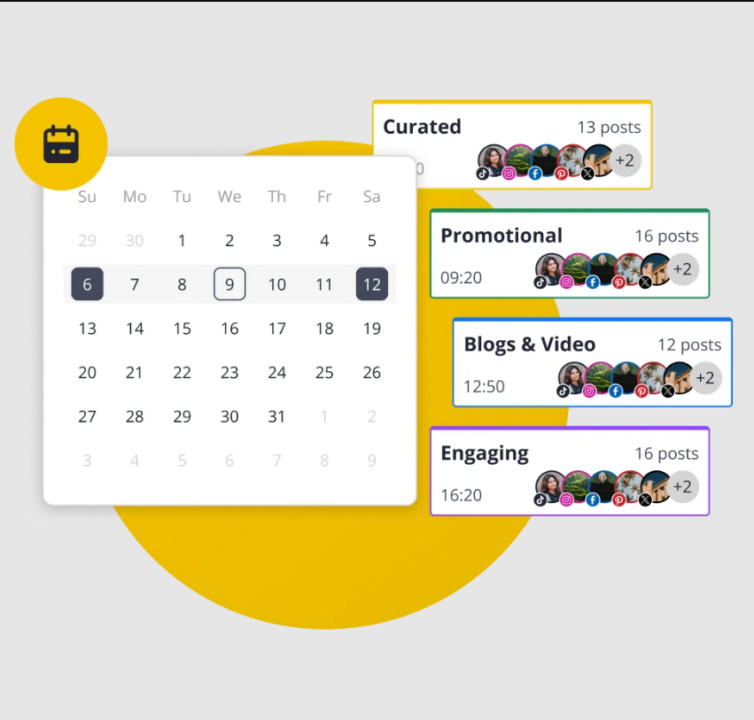
Engagement-first content, when scheduled and published consistently with the help of social media management platforms like SocialBee, leads to a high volume of saves. This is better than surface-level approval suggested through likes, because saves signal that your content provides genuine, lasting value.
Generates Higher ROI
Engagement-first content, when planned properly with the help of analytics offered by social media marketing tools, helps find out the content type that works best with your target audience. This approach is better because an engaged community of 1000 highly involved users will lead to more leads and purchases than 50,000 passive followers who scroll past your messaging.
Strategies to Shift to Engagement-First Content
In order to optimize your output for your community while keeping it aligned with your intent, you need to follow these strategies:
Create Saveable Assets and Use Interactive Features
One of the best ways to create engagement-first content is by creating saveable assets. You can even use AI-powered content generation features offered by tools for social media management for the same.
Saveable assets include actionable templates, educational insights, or checklists that compel your users to save the post and revisit it later.
In case of interactive features, use platform-specific features like Instagram polls, carousels, quizzes, and question-and-answer boxes to encourage active participation.
Encourage Quality Dialogue
Another strategy for creating engagement-first content is by ending posts with open-ended, specific questions that invite debate or industry dialogue instead of a simple yes/no. This will show the algorithms that your users find your content valuable, helping it reach wider audiences.
Engage Back
Social media is a two-way street. This means that when you respond to user comments with thoughtful insights, it helps build deeper connections and develop brand trust. Additionally, you can even engage in relevant local platforms across multiple social media platforms.
One of the best ways to keep track of your engagement is with the help of social media marketing tools, as you can connect your notifications across different platforms in one inbox.
Use SocialBee for Creation and Management of Engagement-First Content
Engagement-first content has become the key to having a social presence that leads to strong community building, higher click-through rates, an increase in quality leads and sales, and strengthened brand loyalty. To further increase the benefits of this content type, use social media marketing tools.
SocialBee is one of those social media tools that can become your one-stop solution for all your social media management needs. It will be able to help with content categorization and planning, automated content publishing, easy optimization for different social media platforms, data-backed analytics to know top-performing content, and easy collaboration across teams. Try it for free now!
FAQs
How often should I publish engagement-first content?
Consistency matters more than frequency. Publishing high-quality, interactive content two to four times a week is often more effective than posting daily without encouraging meaningful engagement.
Is engagement-first content suitable for every industry?
Yes. Whether you operate in healthcare, finance, retail, education, or SaaS, creating content that informs, solves problems, or starts conversations can improve audience engagement.
What is the biggest mistake brands make with engagement-first content?
Many brands focus only on publishing interactive posts but fail to respond to comments, messages, and discussions. Active participation is essential for building genuine engagement.
What is a good engagement rate for social media content?
A good engagement rate depends on the platform and industry. Generally, rates between 1% and 5% are considered healthy, while highly engaged niche communities often achieve even higher rates.