
If you’ve been convicted of a DUI or DWI in Maryland, or you’re facing one, there’s a good chance an ignition interlock device is part of your future, whether or not you were the “worst case” scenario you might picture. Since October 2024, Maryland closed a loophole that used to let many first-time offenders avoid this requirement entirely. Here’s what the program actually involves, what it costs, and what counts as a violation once you’re in it.
What an Ignition Interlock Device Actually Does
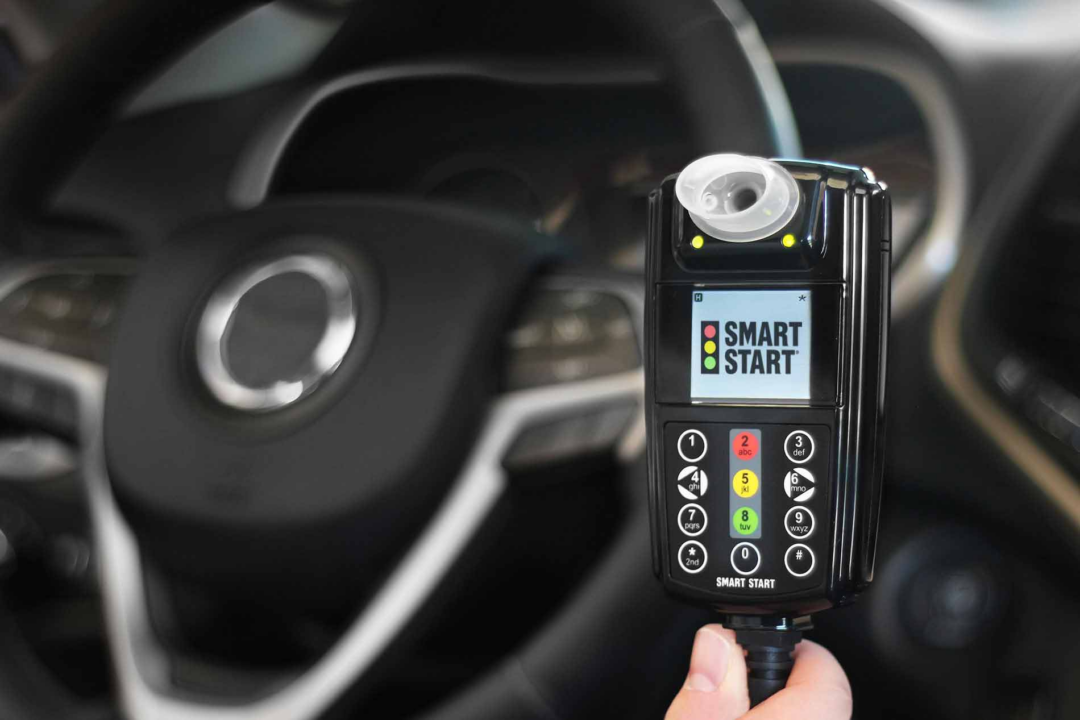
An ignition interlock device (IID) is a camera-enabled breath-testing unit wired into your car’s ignition system. Before the engine starts, you have to blow into it. If your blood alcohol concentration reads above 0.025, the car won’t start. Once you’re driving, the device randomly prompts “rolling retests,” though you don’t need to pull over to take them. Every test result and event gets logged and reported to the Motor Vehicle Administration.
Maryland’s program isn’t new. It’s one of the oldest ignition interlock programs in the country, running since 1989 and managed by the MVA.
Who Actually Has to Get One: Noah’s Law, Explained
The program is named for Officer Noah Leotta, a Montgomery County police officer killed in 2015 by a repeat drunk driver during a holiday DUI enforcement checkpoint. The Drunk Driving Reduction Act of 2016, known as Noah’s Law, significantly expanded who’s required to participate.
As of October 1, 2024, Maryland closed what had been a major gap in the law. Previously, a first-time offender who received Probation Before Judgment (PBJ) instead of a formal conviction could avoid the interlock requirement entirely. That’s no longer true. Today, the interlock requirement applies to anyone convicted of, or granted probation before judgment for, DUI, DWI, a test refusal at the time of arrest, or an impaired driving offense that caused a fatal or life-threatening injury.
In practical terms, this means even a first-time DWI with a BAC as low as 0.09 can now result in mandatory enrollment. The distinction between a more serious and less serious offense still matters, but now it mainly affects how long you’re in the program, not whether you’re in it at all. This requirement is codified under Maryland Transportation Article §21-902(a) and (b), which also covers license actions tied to accumulated points on an alcohol-related DUI record.
How Long You’re Required to Have One
Program length depends on your specific circumstances:
- First-time DUI/DWI: typically 6 months
- First-time offense with a BAC of 0.15% or higher: typically 6 months, with enhanced scrutiny
- Test refusal: 1 year (often offered as an alternative to serving a full license suspension)
- Second or subsequent DUI/DWI: generally 1 to 3 years, depending on your history
- Repeat refusals or multiple alcohol-related violations: 2 years or more in some cases
Under Noah’s Law, you also need three consecutive violation-free months before you’re eligible for release from the program, regardless of your original assigned term. A single violation late in the process can push your release date back.
What It Actually Costs
Maryland doesn’t cover any part of the cost. You’re responsible for installation, monthly monitoring, calibration visits, and eventual removal. Pricing varies by provider, but expect somewhere in the range of $2.50 to $3.50 per day, which typically adds up to roughly $600 to $900 over a standard 6-month term. Longer program lengths for repeat offenses obviously cost more over time.
Some Maryland residents may qualify for assistance programs that help offset installation costs, worth asking your Ignition Interlock Service Provider about directly.
What Counts as a Violation
Common violations include a breath sample over the 0.025 limit, a missed or failed rolling retest while driving, and missing your required 30-day service and calibration appointment. According to the MVA’s own FY2024 program report, more than 6,700 drivers recorded an interlock violation involving a breath sample above the legal threshold that year, and 1,814 drivers were removed from the program entirely for noncompliance and didn’t reenter. A violation doesn’t just risk removal from the program. It can also mean your original license suspension or revocation gets reinstated, and your program length can be extended.
How Enrollment Actually Works
If you’re required or choose to participate, the process generally involves:
- Confirming your license isn’t already suspended, revoked, canceled, or refused for unrelated reasons
- Enrolling with an MVA-approved Ignition Interlock Service Provider and having the device installed
- Surrendering your standard Maryland license and receiving a restricted license limited to interlock-equipped vehicles, within the same enrollment window covered in our Maryland DUI arrest timeline
- Bringing the vehicle in every 30 days for service and data download
Commercial driver’s license holders need to downgrade to a non-commercial license to participate, since interlock-restricted licenses don’t cover CDL privileges. There’s also a narrow exception for employer-owned vehicles used strictly for work, worth raising directly with your Ignition Interlock Service Provider and the MVA if it applies to you.
The “50 Starts” Rule Almost Nobody Mentions
Here’s a detail most explanations of the program leave out entirely: Maryland requires interlock participants to start their vehicle at least 50 times within a 30-day period. If you’re driving less than that, because you’re carpooling, working from home, or dealing with an illness, you’re required to notify the MVA in writing that you won’t be operating the vehicle as often. Skipping that notification can itself register as a “low-start violation,” even if you weren’t doing anything wrong. This is a small administrative step that’s easy to overlook and genuinely worth building into your routine once you’re enrolled.
Fee Waivers: What’s Actually Available
The program is expensive, but Maryland does offer real financial relief for qualifying drivers, not just a vague “assistance available” line. The MVA may waive the $47 enrollment fee entirely for participants on medical assistance or food assistance, and approved providers are required to offer 50% off their rental rates to people on assistance. To apply, you’d file the Ignition Interlock Participation Fee Waiver Application (Form DC-212) with the MVA. It’s worth asking about this directly rather than assuming you don’t qualify, since eligibility is based on documented assistance status, not a means test you have to guess at.
The Numbers Behind the Program
To put this in perspective: nearly half of all Ignition Interlock Program participants in FY2024, about 48.6%, resided in just four counties: Anne Arundel, Baltimore, Montgomery, and Prince George’s, according to the MVA’s own status report. If you’re in one of these counties, you’re in the population the program is most actively enforcing against, and local courts and MVA offices handle a high volume of these cases regularly.
Why This Connects to Your Broader Case
The interlock requirement is separate from, but related to, both your criminal case and your MVA license case. We cover how those two tracks work together (and where they diverge) in our guide to the MVA hearing versus your criminal DUI case. For the penalties that can trigger an interlock requirement in the first place, see our guide to Maryland DUI penalties.
What Actually Happens When You Get a Violation Notice
This is where the process gets more procedural than most explanations let on, and it’s worth understanding before it happens to you, not after.
The consequence escalates with repeated violations, not a single one. Getting flagged once doesn’t remove you from the program. Maryland’s process works in stages:
| Violations | What Happens |
| First violation | Extends your program duration by roughly one month; you receive a notice |
| Violations across 4 separate monitoring periods | Triggers a “Final Notice and Removal From Program” letter |
| No response within 15 days | Removal proceeds, and your original suspension is reinstated |
| Removed and later re-enrolling | Minimum 30-day wait, with no credit for time already served |
A realistic scenario that comes up often in practice: a driver’s car is in the shop for repairs, or won’t start for a purely mechanical reason unrelated to alcohol. The device logs this as a “failure to start” violation because it can’t distinguish a mechanical problem from a driver avoiding the test. On paper, that looks identical to a real violation. In practice, this is exactly the kind of flagged violation that’s often successfully challenged with repair records, mechanic documentation, or the device’s own data logs showing no breath sample was actually attempted. The MVA’s violation notice looks final and authoritative, but it isn’t the last word. You have the right to respond within 15 days and request a hearing before the Office of Administrative Hearings (OAH) before any removal takes effect.
The practical lesson here: not every flagged “violation” reflects what actually happened, and the 15-day window to respond is not a formality. Missing it is often what turns a fixable, explainable event into an actual license suspension.
Can a Lawyer Help With This?
An attorney can’t make the interlock requirement disappear once it’s legally triggered, but the underlying charge and BAC finding are often exactly what determines whether you’re facing 6 months or several years in the program, or whether you’re required to participate at all. In some cases, the requirement never gets triggered in the first place, for instance, if the case is dismissed outright rather than resulting in a conviction or PBJ. This is one more reason the earliest stages of a DUI case, including how the stop and testing were handled, matter well beyond just the criminal penalty. If you’re facing a DUI or DWI charge and want to understand your full exposure, including the interlock program, our Maryland DUI defense attorneys can walk you through what to expect.
For official program details, enrollment steps, and current provider lists, the Maryland MVA’s Ignition Interlock Program page is the authoritative public resource.
Frequently Asked Questions
Do I have to install an interlock device even if I got Probation Before Judgment? As of October 2024, yes, in most cases. The previous PBJ exception was eliminated, closing a gap that had let many first-time offenders avoid the requirement entirely.
What happens if I get a violation while in the program? Depending on severity, a violation can extend your program length, and in more serious cases, result in removal from the program and reinstatement of your original license suspension or revocation.
Can I choose to install an interlock device voluntarily? In some cases, yes, particularly to avoid serving a full suspension period after a test refusal. This can be worth discussing with an attorney if you rely on driving for work or family responsibilities.
Does the state help pay for the device? No, the cost is the driver’s responsibility, though some assistance programs exist for qualifying individuals. Ask your service provider about current options.
How long is the interlock requirement for a second DUI in Maryland? Generally 1 to 3 years, depending on your specific history and the circumstances of the offense.
My car wouldn’t start for mechanical reasons and it got logged as a violation. What can I do? This happens more often than people expect, and it’s one of the more commonly and successfully challenged violation types. Repair records, mechanic documentation, or the device’s own logs can often show the flagged event wasn’t actually a missed or failed test. You have 15 days to respond and request a hearing before removal takes effect, so don’t ignore the notice even if you’re confident it was a mechanical issue.
Can I get removed from the program permanently, or can I always reapply? Removal isn’t necessarily permanent, but it isn’t simple either. After removal, you must wait at least 30 days before reapplying, and you don’t get credit for time already served, meaning you effectively start the program duration over.